



Nov
Running BPC 157 and TB 500 together is close to standard practice in tissue repair research, and almost nobody asks why. BPC 157 and TB 500 together gets treated as settled, passed along as a given, and repeated often enough that the reasoning behind it has gone missing. It is worth recovering, because the two peptides come from entirely different places and do entirely different things, and that difference is the actual argument for using BPC 157 and TB 500 together rather than either one on its own.
On this page
What each peptide actually is
The bpc 157 peptide is a pentadecapeptide, fifteen amino acids long, derived from a sequence found in a protein present in human gastric juice. That origin is genuinely unusual and it matters, because it is why the molecule is markedly more stable in solution than a synthetic peptide of comparable size. Research interest has centred on angiogenic signalling and on fibroblast behaviour in connective tissue, which is where most of the published tendon and ligament work sits.
The tb500 peptide is something different in kind. It is a short synthetic fragment of thymosin beta 4, a 43 amino acid protein involved in actin regulation, and the fragment sold under the TB500 name corresponds to the actin binding region rather than the whole protein. The published work on it concerns cell migration and cytoskeletal dynamics. One compound is studied for how tissue gets a blood supply, the other for how cells move into position once there is one.
So the bpc157 vs tb500 framing, or bpc-157 vs tb-500 as it is more commonly typed, is the wrong question to ask about bpc157 tb500 material. They are not rival options that a researcher picks between.
Why they are run as a pair
Given the above, the case for using BPC 157 and TB 500 together becomes fairly obvious. The two mechanisms address different stages of the same process. In BPC 157 and TB 500 together, vascular signalling and cell migration are sequential rather than competing, and a model designed to look at repair in tissue needs both to be operating if it is going to resemble anything physiological.
That is the honest version of the argument. The dishonest version, which you will find across a great deal of the material discussing bpc 157 and tb 500 benefits, is that the two are synergistic in some demonstrated quantitative sense. That claim is not supported by the published record. There is no body of controlled work establishing a synergy coefficient between these two peptides in people, and anyone presenting one is inventing it. What can be said is that they are mechanistically complementary and that research designs frequently include both for that reason.
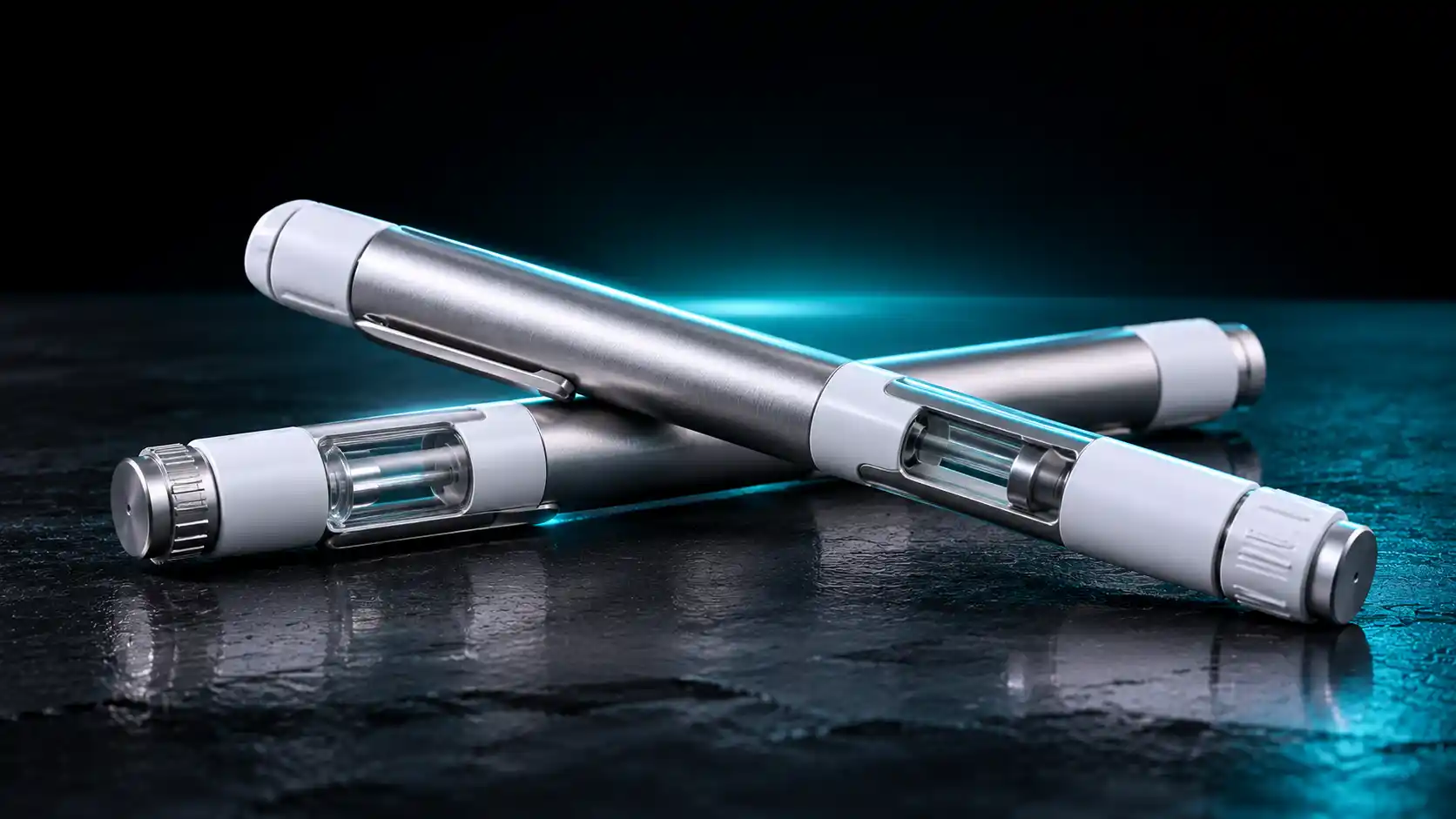
The practical argument is simpler and better evidenced. Running BPC 157 and TB 500 together from one cartridge removes a second reconstitution step, a second batch code to track and a second set of dead volume losses, which is the entire reason the BPC157 and TB500 40mg pen kit exists as a single product.
The blend ratio question
Ask what ratio a bpc 157 tb 500 blend should use and you will get confident answers that disagree with one another. The reason is that there is no established optimum, because establishing one would require comparative dose ranging work that has not been done in humans for either compound individually, let alone in combination.
Equal parts is the convention for bpc-157 and tb-500, and it is a convention rather than a finding. Our pen carries 20mg of each for a 40mg total, which is the ratio most research protocols specify and the one most suppliers settle on. The merit of equal parts is not that it is proven correct. It is that it is transparent, easy to calculate from, and easy to vary deliberately if a design calls for something else.
What matters far more than the ratio itself is knowing it precisely. A blend whose composition you are taking on trust is not a research input, it is a guess. This is why our certificate reports each peptide separately rather than giving a single combined purity figure for the pen, which is a common practice and tells you very little.
Pre-blended against two vials
Anyone who has prepared BPC 157 and TB 500 together from separate vials knows the failure modes. Two reconstitutions means two opportunities to shear peptide by shaking, two measured solvent volumes to get right, and a combination step afterwards where the ratio depends on both of the preceding steps having gone correctly. Errors compound rather than cancel.
Co-lyophilising BPC 157 and TB 500 together at production removes all of that. The two powders are combined and freeze dried as one cake, the ratio is fixed and verified before it ships, and you perform a single reconstitution. The trade is flexibility. A pre-blended pen cannot be re-proportioned, so a design that needs a ratio other than one to one needs separate material.
For most work the trade is worth making. For ratio varying studies it is not, and in that case two single compound presentations are the correct purchase.
Concentration maths for a blend
Concentration arithmetic for BPC 157 and TB 500 together is where a blend differs from every other pen in the range, and where people trip up. The 40mg total reconstitutes into one volume, so there are two concentration figures to carry rather than one, and reading the total instead of the per peptide figure puts you out by exactly a factor of two.
| Solvent added | Total per ml | Each peptide per ml |
|---|---|---|
| 2ml | 20mg | 10mg BPC157, 10mg TB500 |
| 4ml | 10mg | 5mg BPC157, 5mg TB500 |
| 5ml | 8mg | 4mg BPC157, 4mg TB500 |
| 8ml | 5mg | 2.5mg BPC157, 2.5mg TB500 |
Write both figures on the barrel label, not just the total. The method behind the table is the same one set out in our retatrutide dosage calculator guide, which works through the conversion from mass and volume to pen graduations in full.
Handling and storage
The co-lyophilised BPC 157 and TB 500 together cake is stable in its sealed cartridge at 2 to 8 degrees Celsius, out of direct light. Reconstitute with the bacteriostatic solution supplied, running the stream down the inner wall rather than onto the powder, then leave it to dissolve. Swirl gently if it is slow. Do not shake. Agitation shears peptides and the haze that follows does not clear, whichever of the two you damaged.
Refrigerate after reconstitution and date the label. The full technique is in our peptide reconstitution and storage guide, and the pen mechanics are covered in how to use a peptide pen.
What the evidence actually supports
Worth being straight about this, because searches for bpc 157 and tb 500 benefits and bpc 157 reviews turn up a great deal of writing that is more confident than the underlying literature.
Most of the BPC157 research base is preclinical, predominantly rodent models, including the frequently cited bpc 157 nerve repair and tendon healing work. The TB500 literature is thinner again. Neither compound holds a marketing authorisation in the UK, the US or the EU, and neither has completed a controlled human efficacy programme. Both bpc157 and tb500 also appear on the World Anti-Doping Agency prohibited list, which is a practical consideration for anyone whose research subjects are competitive athletes.
None of that makes the compounds uninteresting. Preclinical signals are how research programmes start. It does mean the distance between what has been demonstrated and what gets asserted about running BPC 157 and TB 500 together is wide, and that reading the primary material is the only way to see where the line sits.
Where to read the primary research
- Structures, sequences and synonyms for both peptides on PubChem, from the US National Library of Medicine.
- Thymosin beta 4 protein data on UniProt, which is the parent protein the TB500 fragment comes from.
- The preclinical literature through PubMed Central, which is where the angiogenesis and cell migration papers sit.
- Registered human studies, if any, on ClinicalTrials.gov.
- Prohibited status on the World Anti-Doping Agency list, and the UK regulatory position from the MHRA.
The Synedica range
Every Synedica pen, including BPC 157 and TB 500 together, carries a batch code that maps to an HPLC result for that production run, and for the blend that result reports each peptide separately. The full range sits on the Synedica homepage, and the individual products are below.
For a quotation, or the certificate of analysis for the batch currently in stock before you buy bpc157 uk side, reach us through the contact page.
